
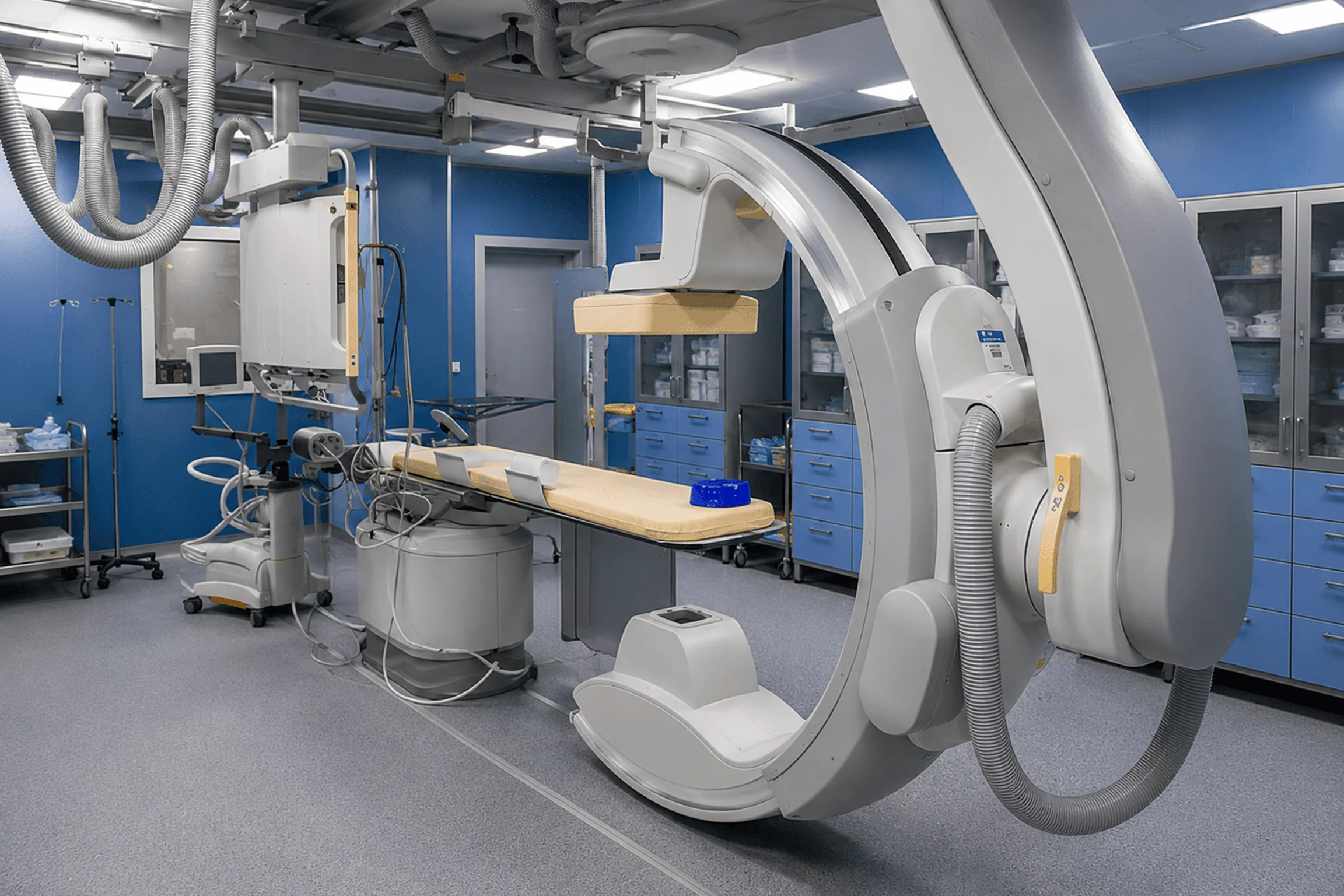
Lymphatic Interventions
Thoracic Duct Embolisation for Chyle Leaks
- Fluoroscopy-Guided Lymphangiography & Embolisation
- No Surgical Incision, No Open Exploration
- Rapid Resolution of Chyle Drainage
- Day-Care to Short-Stay Procedure
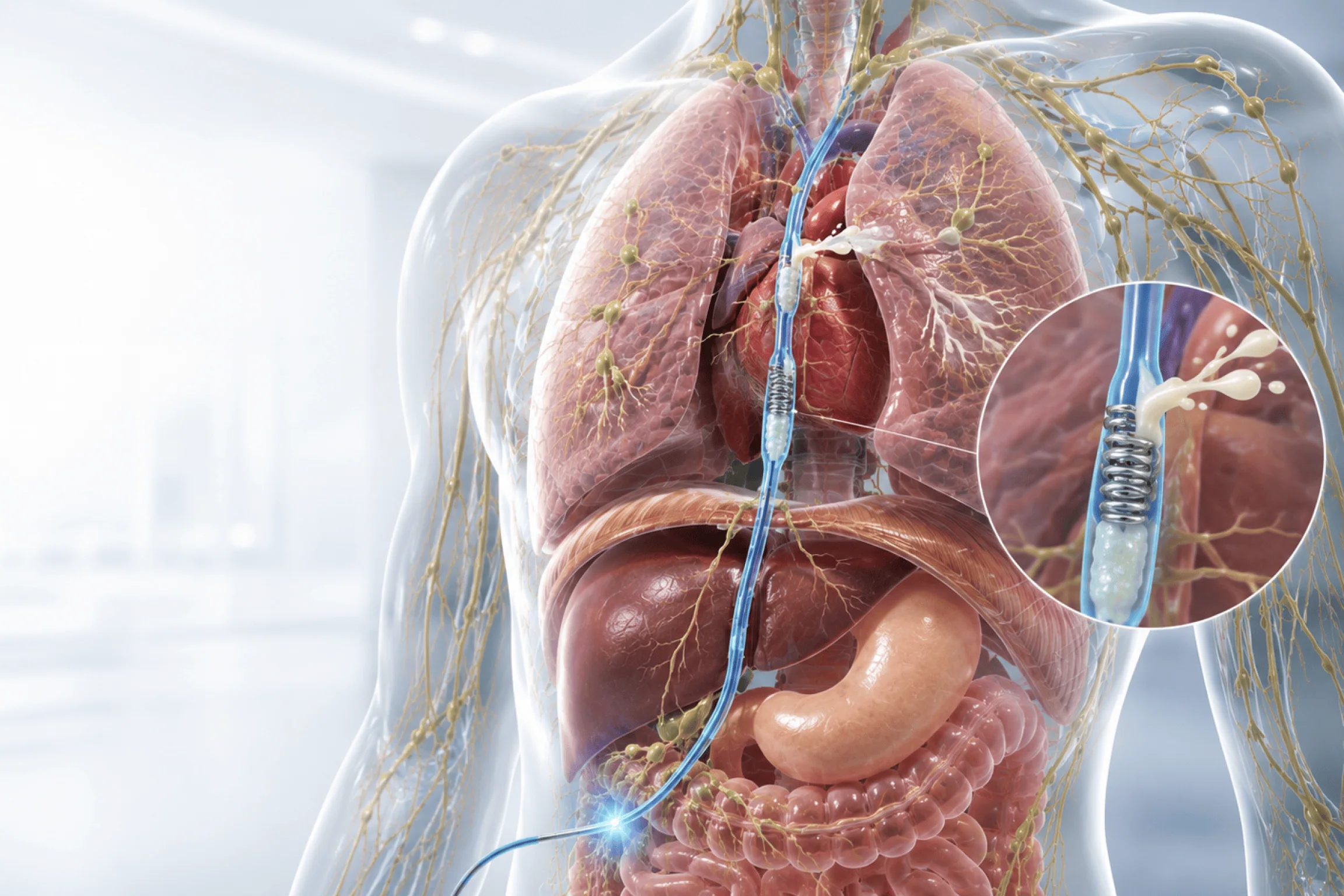
What is Thoracic Duct Embolisation
Scarless Treatment
Rapid Leak Resolution
Nutrition-Preserving
Outpatient to Short-Stay Procedure
Symptoms & Indications
- Persistent milky or creamy fluid drainage from a chest tube or neck drain.
- Breathlessness, cough, or chest heaviness from chylothorax.
- Abdominal distension or discomfort from chylous ascites.
- Non-healing or high-output drainage following neck, chest, or abdominal surgery.
- Nutritional depletion or immune compromise from prolonged lymphatic fluid loss.
- Failure of conservative dietary management to resolve the leak.
How Thoracic Duct Embolisation Works
D
Diagnostic Lymphangiography
Intranodal contrast injection maps the thoracic duct in real time, pinpointing the exact site of chyle leakage.
U
Ultrasound-Guided Access
A fine needle accesses the cisterna chyli or thoracic duct under image guidance, avoiding open surgical exploration.
C
Coil & Glue Embolisation
Coils, glue, or a combination occlude the duct at the leak site, sealing it securely from within.
T
Targeted Duct Disruption
When direct cannulation isn't possible, fine-needle interruption of the duct near the leak site achieves closure.
Lymphatic Interventions Treatment Journey
Scarless Procedure
Fluoroscopy-Guided Access
Short-Stay Recovery
Lymphatic Function Preserved
Post-Procedure Care & Recovery
Immediate Recovery
A period of observation to track chest or neck drain output, vital signs, and puncture site before discharge.
Home Care Plan
Guidance on gradual return to a normal diet, activity restrictions, and puncture site care for the first few days, with most patients resuming routine activities within a few days.
Follow-Up Consultation
Scheduled review to confirm the drain output has resolved, assess for recurrence, and coordinate timing of drain removal with the referring surgical team.


Why Choose Dr. Deepmala Karmakar?
Our interventional radiology practice brings specialised expertise across the full spectrum of vascular and non-vascular care. Every case begins with a thorough clinical evaluation ensuring the most appropriate, evidence-based intervention is selected for each patient’s specific condition.
Every procedure is performed under real-time advanced imaging whether ultrasound, fluoroscopy, or CT enabling precise access and targeted treatment with minimal disruption to surrounding tissue and faster recovery outcomes.
Experienced Specialists
Each procedure is led by a trained interventional radiologist with deep expertise across vascular and non-vascular domains.
Advanced Technology
Procedures are guided by state-of-the-art imaging infrastructure, ensuring accuracy at every step of the intervention.
24×7 Response
Time-critical conditions including acute stroke and vascular emergencies are managed with round-the-clock readiness and a dedicated response protocol.
Image-Guided Precision
Targeted access under real-time imaging minimises tissue disruption, reduces procedure time, and supports faster, more predictable recovery.

Why Choose
Dr. Deepmala Karmakar?
Close coordination with hepatology, oncology, and surgical teams ensures that every patient receives a treatment plan that is not only technically appropriate but aligned with their broader clinical management. Interventional radiology in this space is not a standalone service — it is a core component of comprehensive hepatobiliary care.
Experienced Specialists
Procedures performed by an interventional radiologist trained in lymphangiography and thoracic duct embolisation.
Advanced Imaging Technology
High-resolution fluoroscopy enables precise lymphatic mapping and real-time duct cannulation.
Function-Preserving Approach
Treatment targets the leak site directly, safeguarding overall lymphatic drainage and nutrition.
Minimally Invasive Precision
Needle and catheter-based access avoids incisions, open exploration, and prolonged hospitalisation.
Frequently Asked Questions
How is thoracic duct embolisation different from surgical duct ligation?
Embolisation seals the leak through a needle and catheter under image guidance, without any incision or open exploration of the chest or neck — preserving lymphatic drainage pathways while avoiding a visible scar, unlike surgical ligation.
Is the procedure suitable for all chyle leaks?
Suitability depends on whether the leak site and duct anatomy can be identified and accessed on lymphangiography. Most post-surgical and traumatic chyle leaks are assessed individually through imaging before the approach is finalised.
How soon will the chest or neck drain output improve after the procedure?
Most patients see resolution of drainage within days of embolisation, though the exact timeline depends on leak severity, location, and the patient's overall clinical status.
Get in Touch
A Scarless Solution for Chyle Leaks
90%
Leak Resolution Success
Short-Stay
Recovery
0
Visible Scars
10+
Years of Experience
