
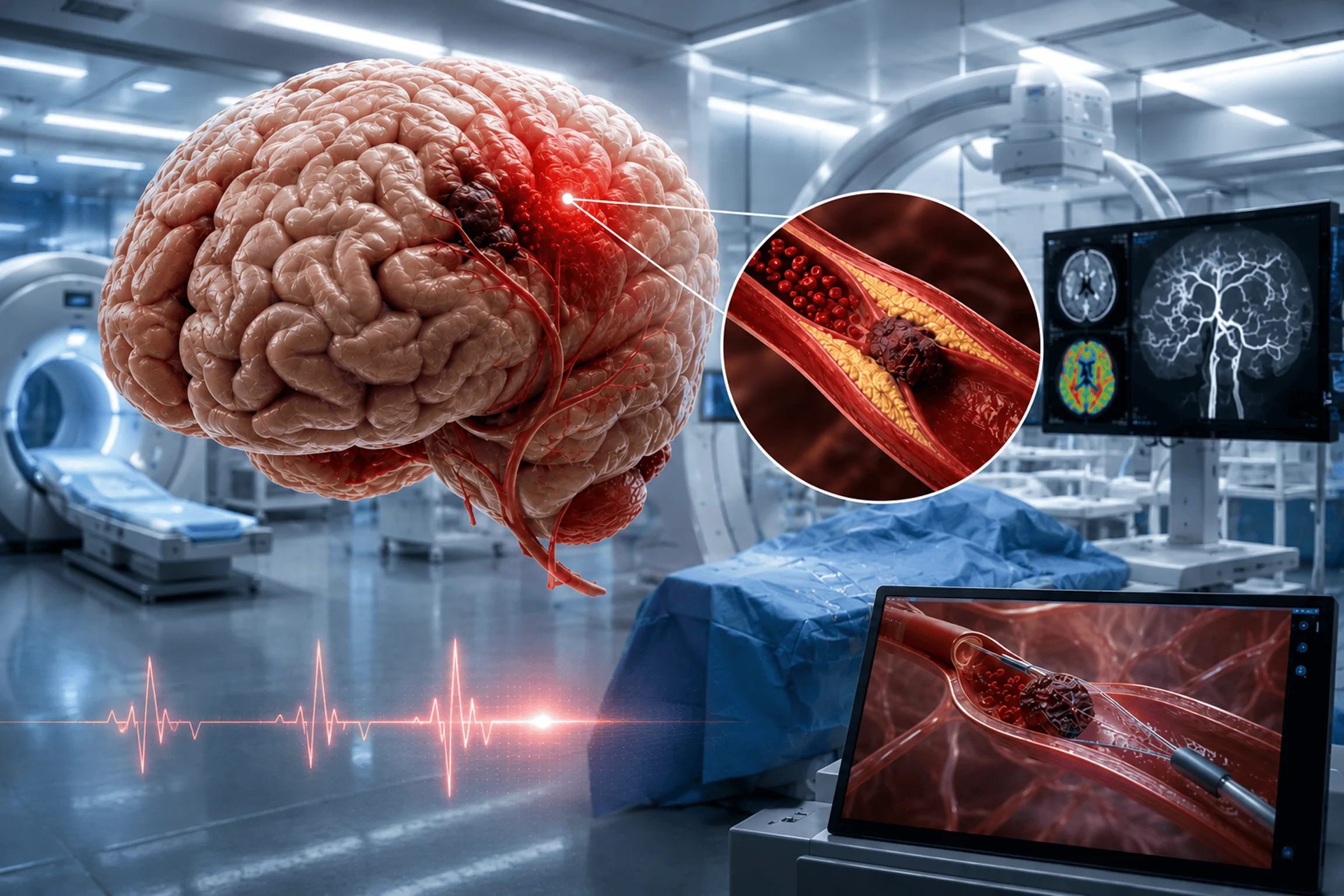
Acute Ischemic Stroke Management
A blood clot blocking a cerebral artery constitutes one of the most time-critical neurological emergencies in medicine. Every minute without intervention results in the loss of approximately 1.9 million neurons making the speed of diagnosis and treatment directly proportional to the preservation of brain function and quality of life.
- Stroke Emergency Available 24×7
- Advanced Neuro-Imaging
- Mechanical Thrombectomy Centre
- Expert Neuro-Interventionalists
What is Acute Ischemic Stroke?
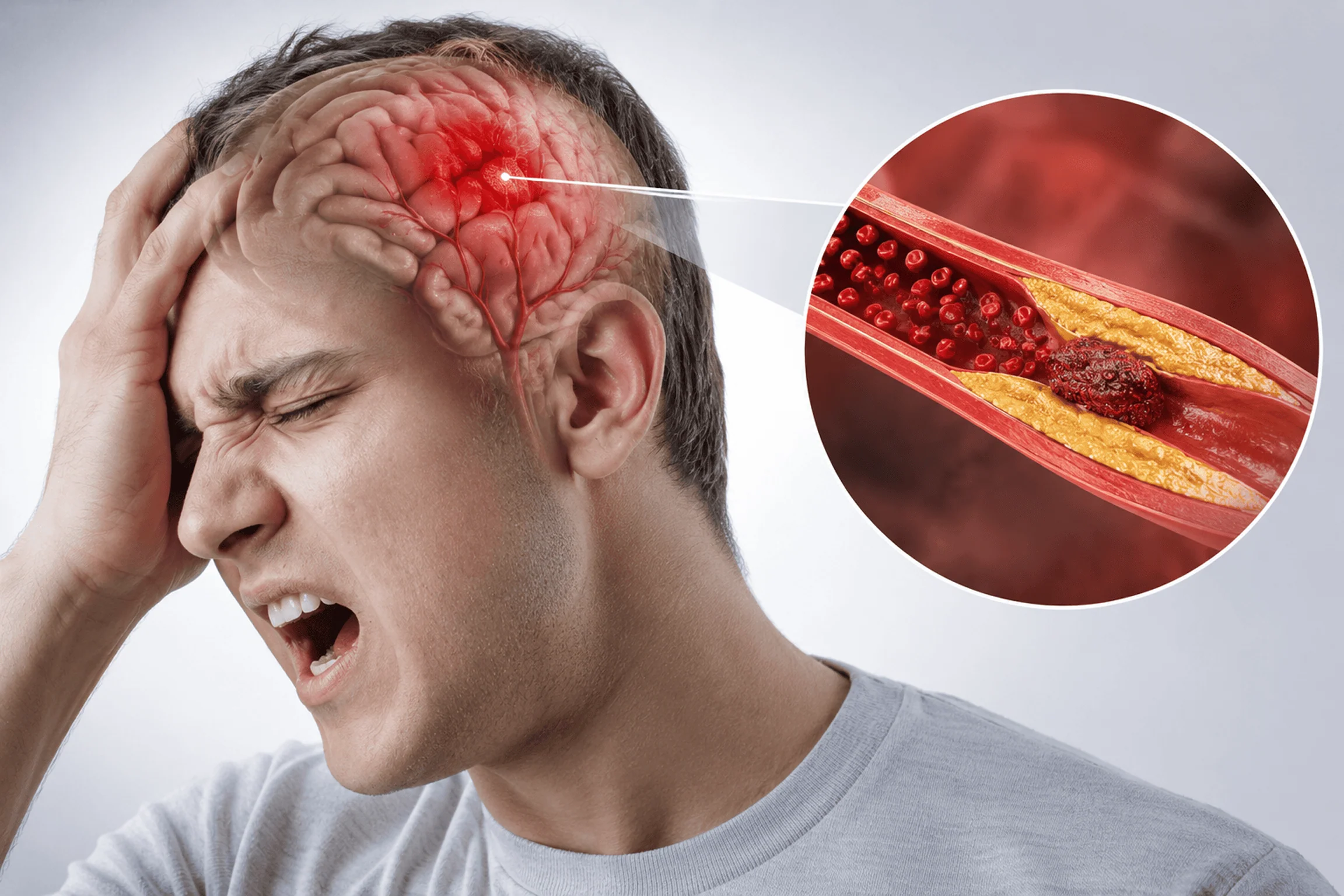
An acute ischemic stroke occurs when a blood clot occludes an artery supplying the brain, abruptly cutting off oxygen and nutrients to neural tissue. The resulting injury is rapid and progressive underscoring why speed of diagnosis and intervention is not merely important, but decisive.
Medical Emergency
Time-Critical
Clot Removal
Brain Function
Rapid Diagnosis
Recovery Support
Symptoms of Stroke
- Sudden numbness or weakness of the face, arm, or leg, particularly on one side of the body.
- Sudden confusion, trouble speaking, or difficulty understanding speech.
- Sudden trouble seeing in one or both eyes.
- Sudden severe headache with no known cause.
- Sudden loss of balance, dizziness, or lack of coordination.
Remember F.A.S.T.
F
Face Drooping
Ask the person to smile. If one side of the face droops or feels numb, this is a warning sign of stroke.
A
Arm Weakness
Ask the person to raise both arms. If one arm drifts downward or cannot be raised, act immediately.
S
Speech Difficulty
Ask the person to repeat a simple sentence. Slurred, strange, or absent speech requires urgent attention.
T
Time to Call
If any of these signs are present, call emergency services immediately. Do not wait for symptoms to resolve.
Stroke Treatment Journey
A structured, time-critical pathway from emergency arrival to recovery designed to minimise brain injury at every stage.
Faster Diagnosis
Time-Critical Treatment
Streamlined Stroke Response
Integrated Care
Post-Procedure Care & Recovery
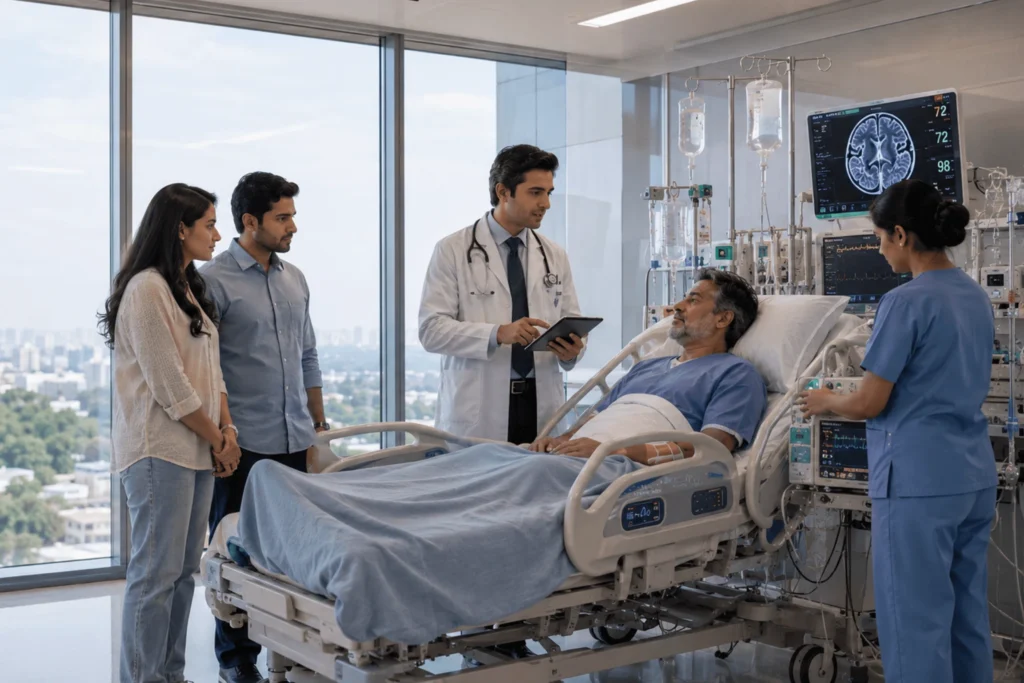
Following the acute intervention, structured monitoring and rehabilitation begins immediately. Recovery from ischemic stroke is a continuous process managed with the same clinical rigour as the emergency phase.
Immediate Recovery
Post-procedure care is delivered in an ICU or high-dependency unit, with continuous neurological monitoring to detect and manage complications early.
Home Care Plan
A tailored rehabilitation and home-care plan is developed in collaboration with the neurology and rehabilitation team, addressing mobility, speech, and daily function based on the individual's recovery trajectory.
Follow-Up Consultation
Scheduled imaging and clinical review appointments are arranged to monitor recovery, assess medication efficacy, and adjust the long-term management plan as required.
Why Choose
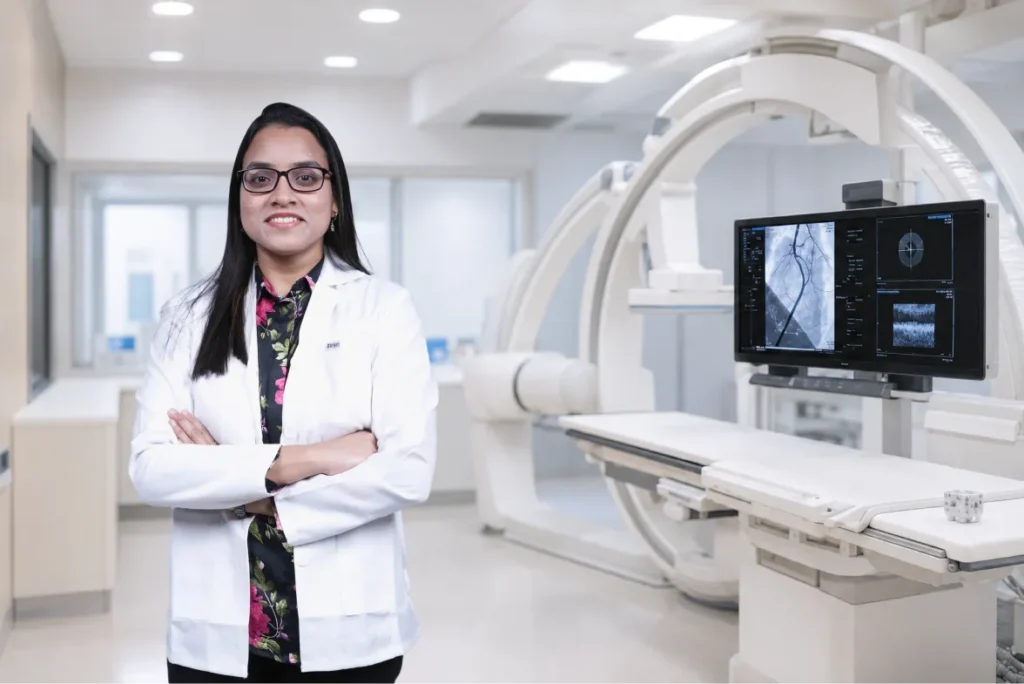
Dr. Deepmala Karmakar?
Acute ischemic stroke demands a team with both the technical expertise and the infrastructure to act decisively. Our neuro-interventional practice is equipped to manage the complete stroke pathway from emergency imaging to mechanical thrombectomy with protocols designed to minimize door-to-treatment time.
Every procedure is performed under advanced real-time imaging guidance, enabling precise catheter navigation to the site of occlusion. The goal is not only clot removal, but meaningful restoration of neurological function and quality of life.
Experienced Specialists
Procedures are led by a trained neuro-interventionalist with dedicated expertise in mechanical thrombectomy and endovascular stroke management.
Advanced Technology
State-of-the-art neuro-imaging and angiography infrastructure supports rapid diagnosis and precise, image-guided intervention.
24×7 Response
Stroke emergency protocols are structured for round-the-clock response, with streamlined ER-to-angiography workflows that reduce time to treatment.
Image-Guided Precision
Real-time fluoroscopic and angiographic guidance ensures accurate clot localisation and retrieval, supporting the best possible neurological outcome.
Frequently Asked Questions
What is the "Golden Hour" in stroke care?
It refers to the critical early window after symptom onset when rapid intervention offers the highest probability of preventing or limiting permanent brain damage. While certain treatments remain beneficial beyond this period, the principle is unambiguous seek emergency care immediately and never wait for symptoms to resolve on their own.
What is a Mechanical Thrombectomy?
Mechanical thrombectomy is a minimally invasive endovascular procedure in which a catheter is navigated through the arterial system to the site of occlusion in the brain. A specialised retrieval device is then used to physically extract the clot and restore blood flow to the affected territory.
Can a stroke be prevented?
In many cases, yes. Actively managing modifiable risk factors including hypertension, diabetes, hypercholesterolaemia, smoking, obesity, and physical inactivity significantly reduces the likelihood of a first or recurrent stroke. Regular clinical review and early intervention for atrial fibrillation and carotid artery disease are also important preventive strategies.
Get in Touch
Act Fast. Every Minute Matters in Stroke Care.
If you or a loved one is experiencing symptoms of an acute ischemic stroke, seek immediate medical attention. Dr. Deepmala and the team are here to provide timely evaluation and advanced treatment.
Emergency Helpline
Speak to Our Stroke Team
Book an Urgent Consultation
Request an Expert Evaluation
