
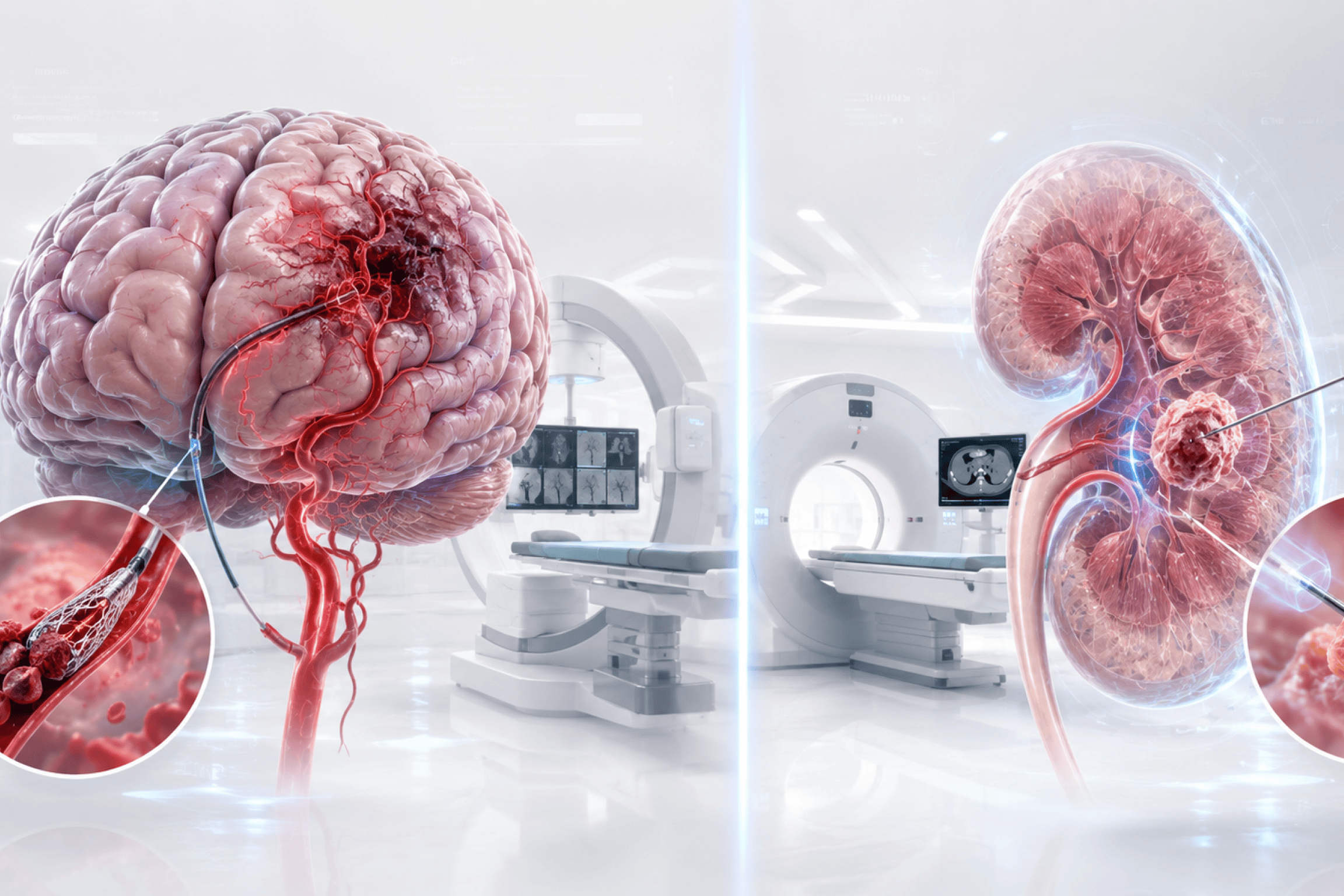
Vascular and Non-Vascular Interventions
- Full-Spectrum IR Care.
- Advanced Image-Guided Precision.
- 24×7 Emergency Response.
- Specialist-Led Every Case.
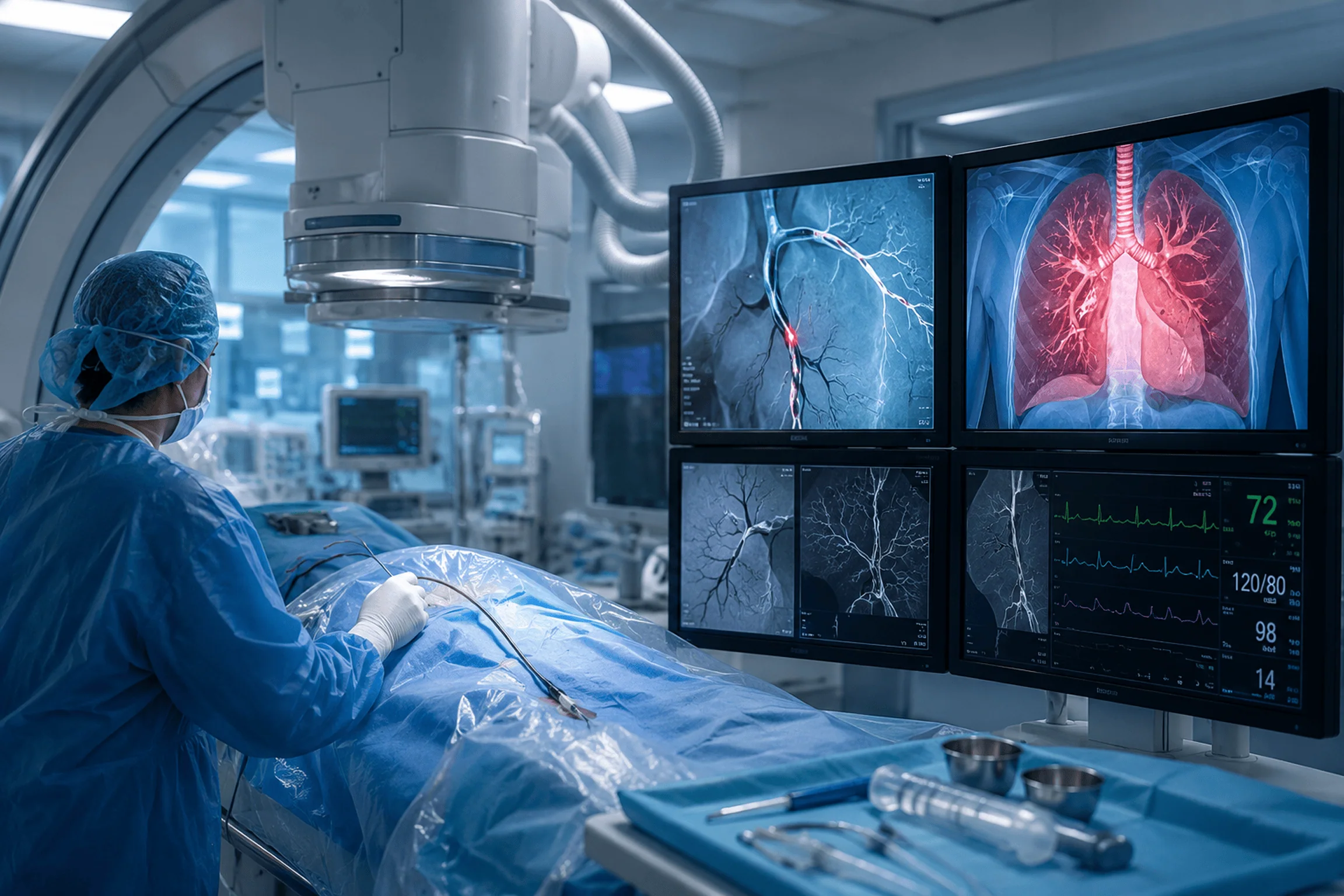
Vascular vs. Non-Vascular Interventions - What's the Difference?
Vascular interventions treat blood vessels directly — arteries, veins, and aneurysms — using minimally invasive endovascular techniques to restore or regulate blood flow without open surgery.
Non-vascular interventions apply the same image-guided precision to organs and tissues: the thyroid, liver, kidneys, uterus, prostate, and lymphatic system, among others. The access point remains small; the clinical impact, significant.
Both approaches share a common advantage — targeted treatment, minimal access, shorter hospital stay, and faster recovery compared to conventional surgery in most cases.
Vascular Care
Non-Vascular Care
Minimally Invasive
Image-Guided
Conditions & Procedures
- Acute ischemic stroke intervention and selected neuroendovascular procedures.
- Brain aneurysm management using endovascular techniques.
- Hepatobiliary and onco-interventions including TACE, TIPS, RFA, and MWA.
- Aortic interventions for vascular emergencies and aneurysmal disease.
- Peripheral vascular interventions - angioplasty, stenting, and laser or RFA for varicose veins.
- Embolisation procedures for varicocele, uterine fibroids, prostatic artery, and bronchial artery.
- Radiofrequency and microwave ablation for thyroid nodules and goitre.
- Genitourinary interventions for urinary obstruction, drainage, and targeted organ treatment.
- Lymphatic interventions including thoracic duct embolisation for chyle leaks.
- Sclerotherapy for vascular malformations.
When Is IR the Right Choice?
I
Image-Guided
Every procedure is performed under real-time imaging, enabling precision that open surgery cannot replicate.
R
Reduced Recovery
Smaller access sites mean less trauma to surrounding tissue and faster return to normal activity.
C
Comprehensive Scope
From stroke to oncology to vascular disease — a single IR specialist can manage care across specialties.
T
Time-Critical Capability
Acute conditions including stroke and vascular emergencies are handled with readiness.
Vascular and Non-Vascular Treatment Journey
Precise Diagnosis
Tailored Treatment Plan
Minimally Invasive Access
Integrated Follow-Up Care
Post-Procedure Care & Recovery
Immediate Recovery
Post-procedure monitoring is conducted in a supervised clinical setting to ensure stable vitals and early identification of any concern before discharge.
Home Care Plan
Detailed written instructions covering activity, wound care, and medication are provided at discharge, tailored to the specific procedure performed.
Follow-Up Consultation
A scheduled follow-up appointment is arranged to review imaging, evaluate treatment response, and advise on the next phase of care.

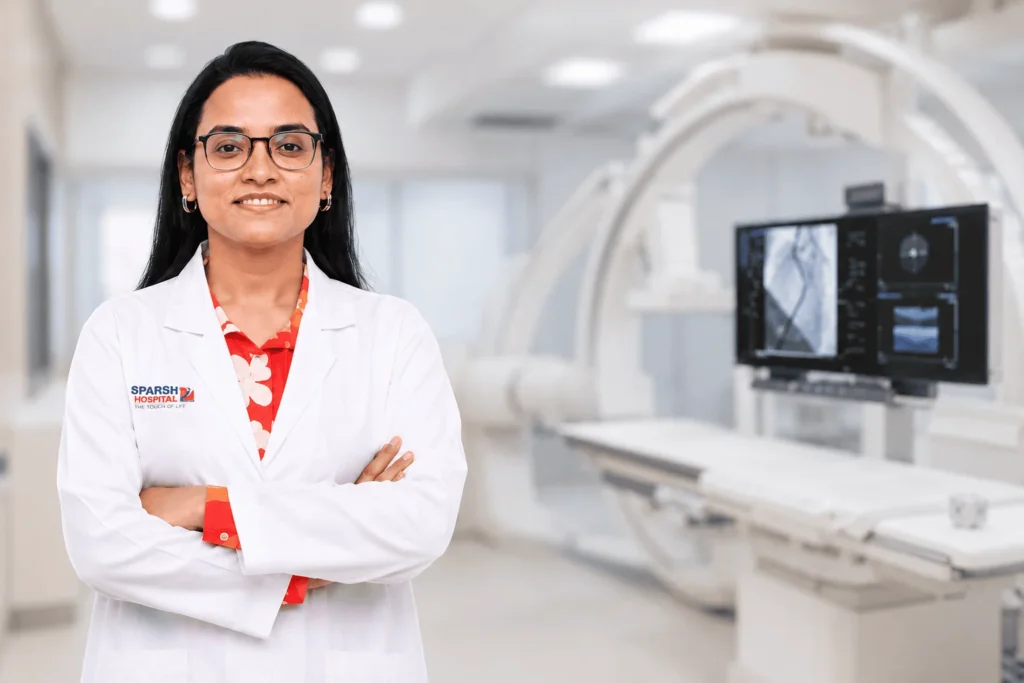
Why Choose Dr. Deepmala Karmakar?
Our interventional radiology practice brings specialised expertise across the full spectrum of vascular and non-vascular care. Every case begins with a thorough clinical evaluation ensuring the most appropriate, evidence-based intervention is selected for each patient’s specific condition.
Every procedure is performed under real-time advanced imaging whether ultrasound, fluoroscopy, or CT enabling precise access and targeted treatment with minimal disruption to surrounding tissue and faster recovery outcomes.
Experienced Specialists
Each procedure is led by a trained interventional radiologist with deep expertise across vascular and non-vascular domains.
Advanced Technology
Procedures are guided by state-of-the-art imaging infrastructure, ensuring accuracy at every step of the intervention.
24×7 Response
Time-critical conditions including acute stroke and vascular emergencies are managed with round-the-clock readiness and a dedicated response protocol.
Image-Guided Precision
Targeted access under real-time imaging minimises tissue disruption, reduces procedure time, and supports faster, more predictable recovery.
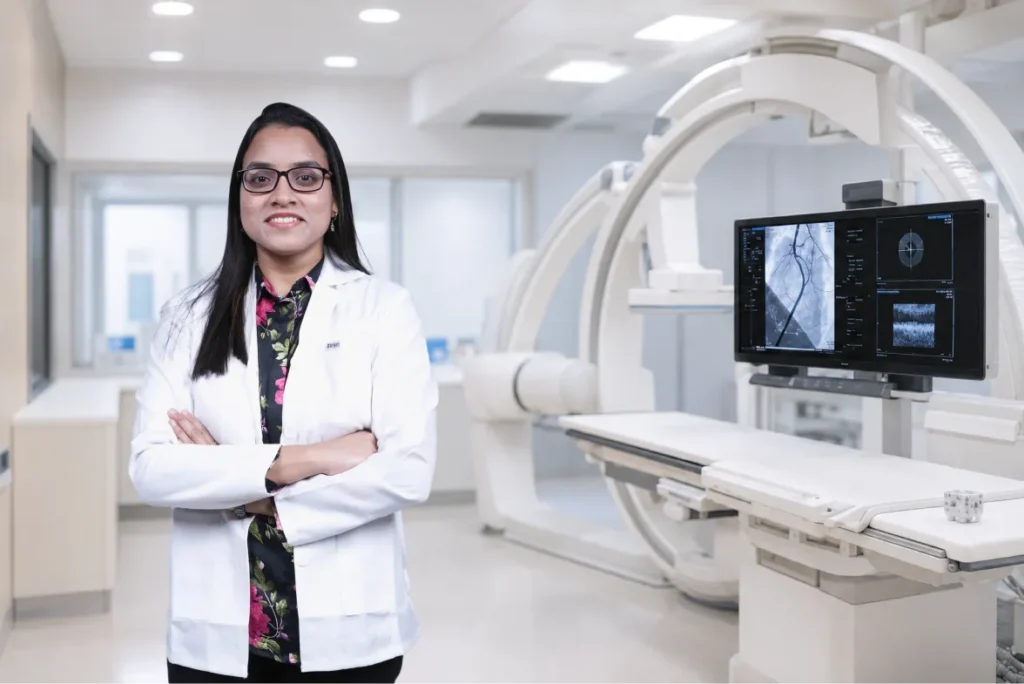
Why Choose
Dr. Deepmala Karmakar?
Our interventional radiology practice brings specialised expertise across the full spectrum of vascular and non-vascular care. Every case begins with a thorough clinical evaluation ensuring the most appropriate, evidence-based intervention is selected for each patient’s specific condition.
Every procedure is performed under real-time advanced imaging whether ultrasound, fluoroscopy, or CT enabling precise access and targeted treatment with minimal disruption to surrounding tissue and faster recovery outcomes.
Experienced Specialists
Each procedure is led by a trained interventional radiologist with deep expertise across vascular and non-vascular domains.
Advanced Technology
Procedures are guided by state-of-the-art imaging infrastructure, ensuring accuracy at every step of the intervention.
24×7 Response
Time-critical conditions including acute stroke and vascular emergencies are managed with round-the-clock readiness and a dedicated response protocol.
Image-Guided Precision
Targeted access under real-time imaging minimises tissue disruption, reduces procedure time, and supports faster, more predictable recovery.
Frequently Asked Questions
What is the difference between vascular and non-vascular interventions?
Vascular interventions treat blood vessels directly — including arteries, veins, and aneurysms — using endovascular techniques. Non-vascular interventions address organs and tissues such as the liver, thyroid, and uterus using the same image-guided, minimally invasive approach.
Are these procedures minimally invasive?
Yes. Most interventional radiology procedures are performed through a small needle or catheter entry point rather than a large surgical incision, which reduces trauma, shortens recovery, and minimises the risk of complications.
How soon can I resume normal activities?
Many patients resume light daily activities within 24 to 48 hours following the procedure. Full return to routine depends on the specific intervention performed and the guidance of the treating physician.
Get in Touch
Act Fast. Every Minute Matters in Vascular Care.
If you or a loved one is experiencing symptoms of an acute ischemic stroke, seek immediate medical attention. Dr. Deepmala and the team are here to provide timely evaluation and advanced treatment.
Emergency Helpline
Speak to Our Stroke Team
Book an Urgent Consultation
Request an Expert Evaluation
