
Can Fibroids Be Treated Without Surgery?
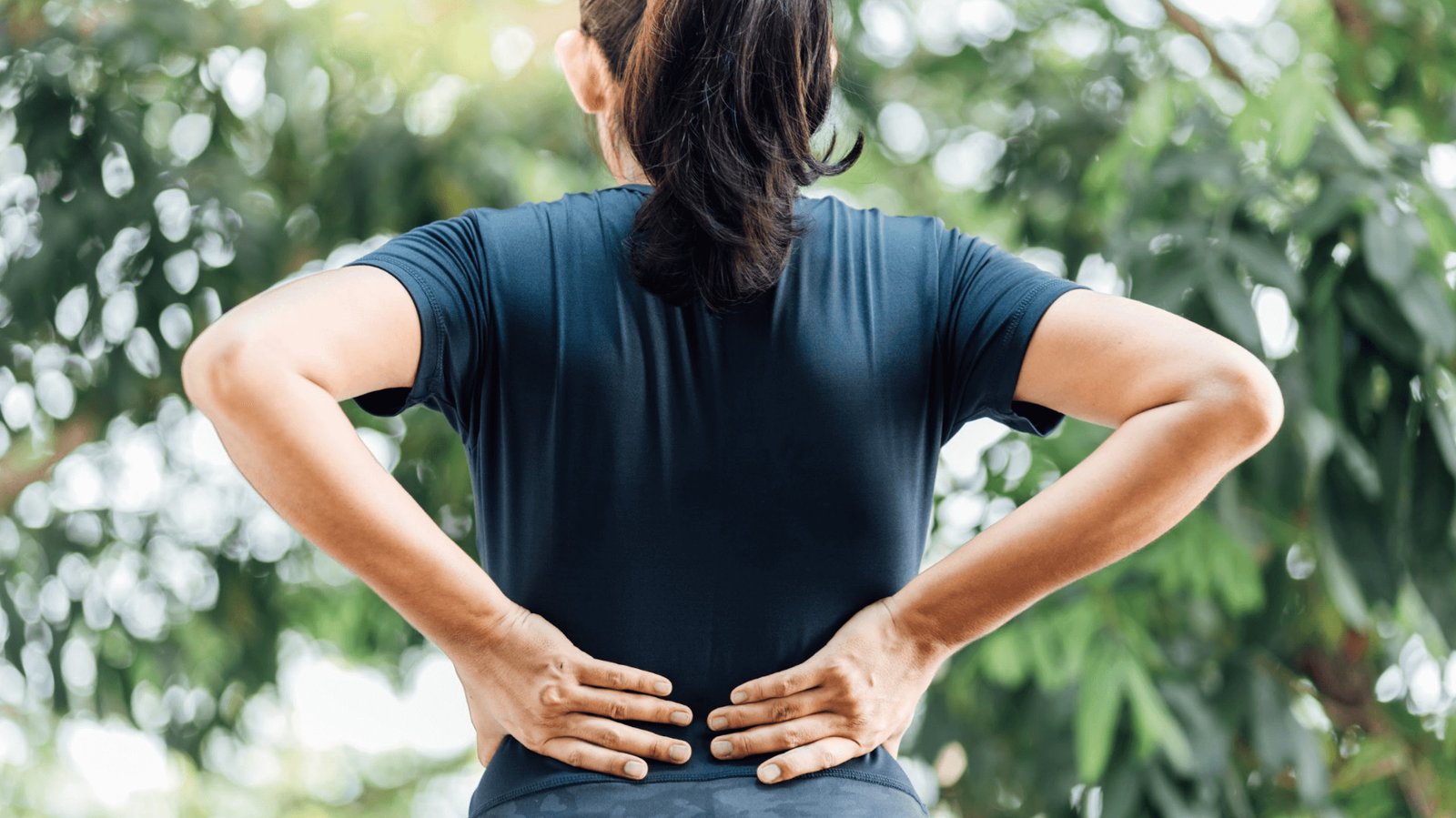
Yes — fibroids can cause back pain. But the mechanism is specific, and most explanations online get it wrong.
Fibroids cause back pain through direct mechanical pressure. As they grow, they can compress the nerves, muscles, and structures adjacent to the uterus — including the lumbar spine and the sciatic nerve. The result is pain that many women spend years attributing to posture, stress, or a ‘bad back.’ The fibroid is rarely the first suspect. It should be.
What Is Happening Inside the Body
The uterus sits in the pelvis, anterior to the rectum and posterior to the bladder. It is surrounded by a network of nerves, blood vessels, and connective tissue. When fibroids grow within or around the uterine wall, they increase the overall size and weight of the uterus significantly.
A uterus without fibroids weighs approximately 60–80 grams. A fibroid-laden uterus can weigh 500 grams or more — the equivalent of a small melon occupying the pelvic cavity.
This mass creates pressure in several directions:
- Posteriorly — toward the lumbar spine, sacrum, and sacral nerve roots
- Laterally — against the pelvic sidewall and uterosacral ligaments
- Inferiorly — downward pressure on the pelvic floor
The back pain that results is not referred pain in the traditional sense. It is the direct consequence of physical compression.
The Three Mechanisms That Cause Fibroid Back Pain
1. Nerve compression
Posterior fibroids — those growing toward the back of the uterus — can compress the sacral nerve roots or the sciatic nerve directly. This produces a pain pattern that mimics sciatica: radiating pain down the buttock, the back of the thigh, and sometimes into the leg. Women with this pattern are frequently evaluated for disc herniation and spinal pathology before fibroids are considered. A pelvic ultrasound or MRI changes the picture immediately.
2. Uterosacral ligament tension
The uterus is anchored to the sacrum by the uterosacral ligaments. As fibroids enlarge the uterus, they place sustained traction on these ligaments. The result is a deep, aching pain in the lower back and pelvis — typically worse during menstruation, when uterine contractions intensify the tension, and during prolonged standing or sitting.
3. Pelvic floor overload
Fibroids increase the overall load on the pelvic floor musculature. The muscles compensate by contracting — producing tension that radiates into the lower back, hips, and glutes. This is often mistaken for muscular back pain and treated with physiotherapy, temporarily and incompletely. The source is not the muscle. The source is the mass creating the load.
When the back pain is more likely fibroid-related:
It is worse or began around the same time as heavy or prolonged periods
It worsens during menstruation specifically
It is accompanied by pelvic pressure or a sensation of fullness
Standard physiotherapy or pain relief has not resolved it
It is associated with frequent urination or difficulty emptying the bladder
You have been diagnosed with fibroids, or haven’t been checked
What Fibroid Back Pain Actually Feels Like
Fibroid-related back pain is not always dramatic. It ranges from a persistent dull ache to sharp, debilitating pain depending on fibroid size, location, and whether nerve compression is involved.
Common descriptions include:
- A constant low-grade ache across the lower back, not associated with a specific movement or injury
- A heaviness or dragging sensation in the pelvis that radiates into the back
- Pain that intensifies during menstruation and eases somewhat afterward — then returns
- Sharp, shooting pain down one or both legs (if sciatic nerve compression is present)
- Pain that worsens after prolonged sitting or standing, and is not relieved by rest
The cyclical pattern — pain that correlates with the menstrual cycle — is one of the clearest indicators that the pelvis, not the spine, is the source.
Why Is This So Often Missed?
Back pain is one of the most common complaints in clinical medicine. The default investigations — X-ray, MRI of the lumbar spine, orthopaedic referral — look at the spine and miss the pelvis entirely.
Fibroids take an average of four years to diagnose from the onset of symptoms. Part of that delay is the fragmentation of care: a woman with back pain sees an orthopaedic surgeon or physiotherapist. A woman with heavy periods sees a gynaecologist. The two symptom clusters are rarely connected unless someone thinks to look at both.
A pelvic ultrasound — a simple, inexpensive investigation — would identify most clinically significant fibroids. It is not routinely included in the workup for back pain. It should be, in women with any accompanying pelvic symptoms.
Other Fibroid Symptoms That Accompany Back Pain
Back pain from fibroids rarely presents in isolation. If you have lower back pain and any of the following, fibroids should be investigated:
- Heavy menstrual bleeding — soaking through pads or tampons, passing clots
- Periods lasting longer than 7 days
- Pelvic pain or cramping outside of menstruation
- Bloating or a distended lower abdomen
- Frequent urination or difficulty fully emptying the bladder
- Pain during intercourse
- Difficulty conceiving
The presence of multiple symptoms in this cluster makes fibroid-related back pain significantly more likely.
How Fibroids Are Diagnosed
If fibroids are suspected based on symptoms, the initial investigation is a pelvic ultrasound. This is performed transabdominally or transvaginally and will identify the presence, size, number, and general location of fibroids.
When more detail is needed — particularly for treatment planning — an MRI of the pelvis is the gold standard. MRI defines fibroid location precisely (submucosal, intramural, subserosal, pedunculated), assesses vascularity, and rules out other pelvic pathology that could be contributing to symptoms.
Neither investigation is invasive. Both are widely available.
What Treating the Fibroids Does to the Back Pain
Back pain caused by fibroid compression resolves when the fibroids are treated. The mechanism is straightforward — remove the pressure, remove the pain.
Treatment options include:
Uterine Fibroid Embolization (UFE)
A non-surgical procedure in which the blood supply to the fibroids is blocked through a catheter inserted at the wrist or groin. Without blood supply, fibroids shrink by 50–60% over 3–6 months. As fibroid volume decreases, the pressure on adjacent structures — including the lumbar spine and sacral nerves — reduces. Back pain resolves progressively as shrinkage occurs. No surgery. No incision. Recovery within 7–10 days.
Myomectomy
Surgical removal of individual fibroids while preserving the uterus. Appropriate for specific fibroid types and locations, and for women planning pregnancy. Recovery is longer than UFE — typically 2–6 weeks depending on surgical approach.
Hysterectomy
Surgical removal of the uterus. Definitive — back pain from fibroid compression will not recur. However, it is major surgery with a 4–8 week recovery and permanently ends fertility. It is not the first-line treatment when non-surgical or uterus-preserving options are available and appropriate.
Key point on treatment and back pain:
Back pain caused by fibroids does not respond to back pain treatments — physiotherapy, anti-inflammatories, and spinal interventions address the symptom, not the cause. Treating the fibroid treats the back pain. If your back pain has not resolved with standard treatment and you have not been assessed for fibroids, that assessment should happen next.
Frequently Asked Questions
Can a small fibroid cause back pain?
Size is not the only variable. Fibroid location matters more than fibroid size when it comes to back pain. A posterior fibroid — one situated toward the back of the uterus — in the range of 3–4 cm can compress sacral nerve roots and produce significant pain. A larger fibroid in a different position may cause no back pain at all.
Will the back pain go away after fibroid treatment?
Yes, in most cases. Back pain caused by fibroid compression resolves as the fibroids shrink or are removed. After UFE, fibroids reduce in volume progressively over 3–6 months, and back pain typically improves in parallel. Women treated surgically usually see resolution after recovery from the procedure.
How do I know if my back pain is from fibroids or from a spinal problem?
The clearest indicator is whether the back pain correlates with your menstrual cycle — worsening around or during your period. Fibroid-related back pain also tends to be accompanied by other pelvic symptoms: heavy bleeding, pressure, frequent urination, or abdominal bloating. A pelvic ultrasound will confirm or rule out fibroids as a cause.
I have fibroids but my doctor says they are small. Can they still cause back pain?
Possibly. Location determines whether pressure on adjacent structures occurs. Ask specifically whether any of your fibroids are posterior — situated toward the back of the uterus — and whether an MRI has been done to assess their relationship to the sacral nerves and uterosacral ligaments.
Can UFE relieve fibroid-related back pain?
Yes. As fibroids shrink following UFE, the mechanical compression that causes back pain reduces. The improvement is gradual — most patients notice significant relief by the 3–6 month mark as fibroid volume decreases. Pain related to nerve compression may resolve more slowly than pressure-type pain.
The Bottom Line
Fibroid back pain is not vague or psychosomatic. It has a clear mechanical explanation: fibroids grow large enough to compress the structures around them, including the nerves and ligaments connected to the lower back.
If you have lower back pain that has not responded to standard treatment — and you also have heavy periods, pelvic pressure, or any of the accompanying symptoms listed above — ask for a pelvic ultrasound. It is a straightforward investigation that answers a straightforward question.
The fibroid is not always found on the spine
Know before you consent.
Back pain from fibroids?
Dr. Deepmala consults on fibroid diagnosis and non-surgical treatment options including UFE.
Book a consultation to understand what is causing your symptoms — and what your options are.
